Sunday, November 13, 2016

Three Teaching Strategies


Roller coaster science 


The strategy-
Behavioral and Academic expectations
This project-based strategy calls for good student behavior, and it will get that behavior, because students will find the learning interesting. The students aren’t just reading about what they are learning, they are actually learning by doing.  As far as academic learning goes, this assignment will foster learning in many areas. The teacher is building their 21st century skills and deepening their knowledge by making them consider every part of the project, from funding and design to planning and execution. The roller coaster must be safe, cost effective, and fun.
Norms, rules, and procedures
Students each have their own jobs. Some must attend the planning meeting and discuss the logistics of their rides, others have to act as accountant, and yet others have to enter the information into the computer program. 

The teaching style comparison
While the other videos’ teaching styles have their own benefits, this is the best style, in my opinion. Bie.org (n.d.) explains that in project based learning, “students gain knowledge and skills by working for an extended period of time to investigate and respond to an authentic, engaging and complex question, problem, or challenge.” In this style, students are given ownership of their own learning. They must complete their part in the assignment, and many standards can be taught within the one assignment. The other styles don’t allow for the level of individual thought and growth I see in this style.
I love hands-on projects. My students were struggling with simple expressions and the abstract nature of problems like 6 X (4 + 13). I used project-based learning (involving cookies and plastic bags) to explain simple expressions. After we completed the lesson, the students were able to understand simple expressions far more clearly.


Chinese math

The strategy-
Behavioral and Academic expectations
This rote strategy has been around for more than 2000 years. As such, students, parents, and teachers know what to expect of the curriculum and the learners. Instant and highly responsive behavior is expected from students. In addition, students are expected to perform academically alongside other students.

Norms, rules, and procedures
The teacher is achieving high levels of engagement because she is not giving the students a moment to rest. Though, at the same time, she is not giving them a moment to think. The students are expected to pay attention and respond constantly and instantly to the cues she gives, and use the memorized facts to find answers.

The teaching style comparison-
This form of memorization, while not as effective alone, can certainly lay the groundwork for learning. Johnson (2010) says that “knowledge without comprehension is of little use, but comprehension requires knowledge and it takes time and effort to acquire.” I love creating hands-on projects, as I mentioned, but helping my students memorize the basics is as important to me as taking those basics and turning them into advanced methods and thoughts. For example, my students often play sparkle or number circle to help them memorize the facts they need to learn. Number circle is where students stand in a circle and we all name multiples of a number up to ten, like by 8s to 80, and I choose a certain number (40, for example) to sit down. We then go around the circle until all the students are sitting. This helps the students memorize the more difficult math facts, like the 7s and 8s.

Whole brain teaching

The strategy-
Behavioral and Academic expectations
Students are expected to follow commands and repeat information to facilitate memorization in this Rote strategy.  Students are given information from the teacher, then expected to go back and forth “teaching” the information to each other. Academically, students are expected to aid their memory by creating hand gestures or following teacher-provided hand gestures. Students are given little time to think, and are expected to be “mirrors” for their teachers the instant the command is called out.

Norms, rules, and procedures
The students are expected to pay attention all the time and repeat what the teachers say. Students are to teach each other at the teacher’s command, and the students are expected to memorize many commands and rules, which they must also be prepared to repeat at a moment’s notice.

The teaching style comparison-

Battle (n.d.) said “Whole Brain Teaching is an approach designed toward maximizing student engagement, and focusing on the way the brain is really designed to learn.” 
There are some things I love about this method. The engagement really is impressive. For things that need memorization, this method can be very effective. I adore the way that neighbors are encouraged to “teach” each others. I also love the speed reading process that can be seen in the video, and the scoreboard or leader board method that I read about while researching really appealed to me.
I really love to acknowledge student achievements, as the leader boards do. I had one student, years ago, that struggled with alphabetizing his spelling words. I praised every improvement and within 3 months, he was getting all his alphabetization correct. This year, I have a student that struggled with spelling. I have seen similar results in my current student’s spelling tests based on my praising his improvements.
This method is similar to the Chinese math method, but it can be used with all types of lessons. If the information can be memorized, this method can be used.

References

Bie Website. (n.d.). What is Project Based Learning (PBL)? Retrieved from https://www.bie.org/about/what_pbl

Johnson, B., (Feb 26, 2010). When Rote Learning Makes Sense. Retrieved from https://www.edutopia.org/rote-learning-benefits


Battle, J., (n.d.). Whole Brain Teaching: Learning the Way the Brain is Designed. Retrieved from http://www.advanc-ed.org/source/whole-brain-teaching-learning-way-brain-designed

Artwork
Shieldforyoureyes Dave Fischer https://upload.wikimedia.org/wikipedia/commons/2/27/Chinese-abacus.jpg
Shannan Muskopf https://upload.wikimedia.org/wikipedia/commons/6/6c/Brain_hirez.jpg

Monday, October 31, 2016

Developing a Positive Classroom Environment

As a teacher, I must create a caring and safe environment for all students.

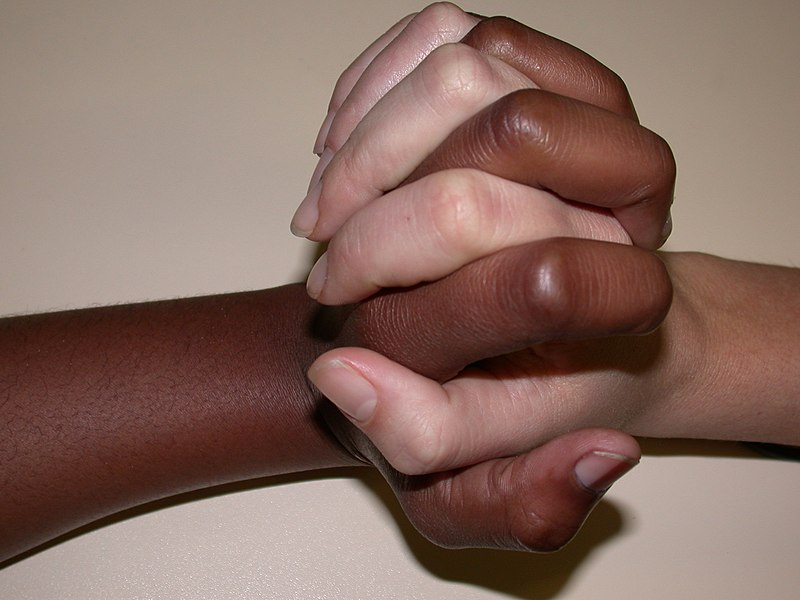
Diverse Cultural Backgrounds
Students with different backgrounds have different needs. Some cultures are quiet, while others are vocal. Many cultures find tradition to be of great importance, whereas others place far less value on it.

I have to address every student’s needs while maintaining an impartial classroom. Santora (2004) says “Children need to see themselves, and people who represent the diversity of their families, their communities, and their world, in the environment in which they live, work, and play.” I cannot allow my classroom to appear to be heavily biased toward any culture or cultures. I also must make sure the other students in class show the same respect for the other students in class.

Positive Relationships in the Classroom
As I learned, while researching positive relationships in the classroom, a teacher must share who they are in an honest manner. I will share stories of myself and my past with students so they can understand where I come from. My students will be encouraged to share themselves as well. Morning meetings, classroom etiquette talks, and rules discussions would be great times for this sharing to occur. As students get to know each other, they will bond and be more likely to create and maintain a friendly and positive environment in the class.  

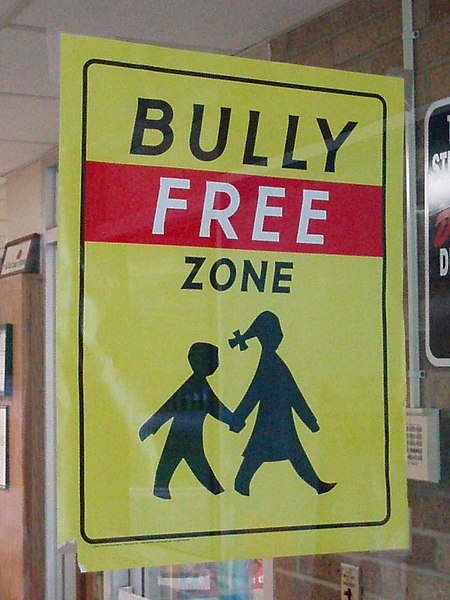
Anti-bullying In and Out of the Classroom

“Bullying Intervention” (n.d.). suggests including “students who might be left out.” I strongly agree that this encouraging mentality is an important part of the positive classroom. To this end, I have my students write something nice about every other student in class. I then have students draw their own likeness and write all the kind comments around them. Students love to read the sweet things others in class have said about them. They rarely walk away from those posters without a smile.


Positive Engagement
Allred (2008) suggests “teachers help students understand that people are likely to feel good about themselves when they engage in positive actions.” This is why I will be reading books and sharing videos that encourage students to engage in positive behaviors. Each Kindness is a great book to help with this. It will help students to understand that we must do kind things while we have the chance, or the opportunity might be lost.

Making Mistakes
It's important that students feel comfortable enough to be themselves. This video calls to the viewers attention how important it is for students to feel comfortable making mistakes. I try to maintain a safe classroom environment. The students in my class have to feel safe to make mistakes, work at their own pace, and try without fear of embarrassment. 

In Conclusion
If the environment is positive, students can feel free to learn and grow at their own pace. They will be less likely to bully and more likely to be invested in the class as a whole. It is my goal, as a teacher, to create this environment for my students every day.

Resources
Allred, C. G., (Sept. 2008). Seven Strategies for Building Positive Classrooms
The Positive Classroom V66 (issue 1) Retrieved from http://www.ascd.org/publications/educational-leadership/sept08/vol66/num01/Seven-Strategies-for-Building-Positive-Classrooms.aspx

Bullying Intervention Strategies That Work.  (n.d.). Education World. (issue 103) Retrieved from http://www.educationworld.com/a_issues/issues/issues103.shtml

Santora, L., (2004) How Can You Create a Learning Environment That Respects Diversity? NYSAEYC Report, Winter 2004. Retrieved from http://www.adl.org/assets/pdf/education-outreach/How-Can-You-Create-a-Learning-Environment-That-Respects-Diversity.pdf

Picture Resources
Eddie~Shttps://commons.wikimedia.org/wiki/File:Bully_Free_Zone.jpg
Frerieke https://commons.wikimedia.org/wiki/File:Diversity_and_Unity.jpg

Saturday, October 22, 2016

Mobile Learning in the Classroom – Uses and Best Practices

 There are many uses for mobile devices in (and outside of) the classroom.

 
Audiobooks and Text to speech can be used to read books and articles to help students with disabilities and students who are English Language Learners.   Redford (n.d.) says, “Listening to audiobooks is a way to deliver words and ideas to a child with limited access to an adult reader.”
In my classroom, I will help my student with attention deficit by allowing him to listen to the audio CD of the weekly story. Also, I will allow my ELL students to use audio CDs of readings and articles. 

Students can use browsers and GPS to join in digital scavenger hunts, play games, and take quizzes. Librarians at North Carolina State University have Library orientation programs where students use iPads and Androids in a scavenger hunt fashion to encourage students to discover facts about the library (Burke & Lai, 2012).
In my classroom, I love to use quizzes and games as practice time and for pre-assessment. Also, I’d like to use mobile devices to initiate a QR code scavenger hunt around the school, and an online scavenger hunt could be exciting as well.


Video and picture capabilities can be used to report findings, notate facts, and practice for presentations. Perhaps, students can even post video assignments online. Feldmann (2016) believes that “Students work harder on their videos when they know that they'll have a wider audience than just their teacher.”
Students in my classroom will take notes for a report. When notes are complete, students will use them to create and record a presentation. Students can then watch each other’s presentations and offer feedback to improve the presentation.   

Students can use ipads and other mobile devices to organize and complete homework. In addition, parents can comment on shared class and homework projects. Graham (n.d.) suggests that mobile apps “help students better organize their assignments.”
I think it would be fun to have students use mobile devices to create mobile learning apps. Also, I could give students the opportunity to collaborate on an assignment through those devices and a wiki site. 

File:IPhone 4 Black.jpg
Best Practices

In a fifth grade classroom, there are several best practices required for mobile learning.
Rules - Students should understand the rules of mobile device usage in the classroom. Usage - Students need to know how to use the devices.
Play/Expectations- Students must understand how to navigate games and activities,   as well as the expectations and how to complete the assignments. 
Timed – Students should be able to complete assignments in a timely fashion.         

Fifth graders need information that is easy to access, interactive, and goal-oriented (Chaffe, 2016).   

Guiding Principles
My fifth graders also need me to follow certain guiding principles.
Use technology judiciously- Not all lessons can be taught with mobile devices.        
Keep activities social- Fifth graders are social creatures, so assignments should be group assignments more often than not.
Realistic goals- Specific and realistic goals are integral at this age. If they do not have a solid goal, they may be confused and drift from the assignment.
 Content should match the standard and the technology should be part of your overall learning structure (Caul, 2013).

Resources
.Burke, A., and Lai, A., (May 4, 2012). iPod Apps, Mobile Learning, Game Dynamics: This Ain’t Your Typical Library Orientation. Retrieved from http://www.loexconference.org/2012/sessions.html


Chaffe, S., (Mar 5, 2016). Getting Mobile Learning Right: 6 Best Practices. Retrieved from https://elearningindustry.com/getting-mobile-learning-right-6-best-practices
Feldmann, A., (Feb 24, 2016). 5 Apps to Transform Teaching and Personalize Learning. Retrieved from https://www.edutopia.org/blog/apps-transform-teaching-personalize-learning-ann-feldmann
Graham, E., (n.d.). Using Smartphones in the Classroom. Retrieved from
http://www.nea.org/tools/56274.htm
Redford, K., (n.d.). How Parents Can Build a Word-Rich Life for Dislexics. Retrieved from http://dyslexia.yale.edu/PAR_wordvocab.html
Caul, R., (Aug 1, 2013). Create a mobile learning strategy. Retrieved from https://www.trainingjournal.com/articles/feature/create-mobile-learning-strategy 

Monday, October 10, 2016

Cognitive Flow in the Classroom: Are You Feeling the Flow?


When I want to achieve cognitive flow, I may read, write, do a logic puzzle, or complete a nonogram. Another way I achieve cognitive flow is through “brain training” apps on my phone. I really enjoy challenging my mind and stretching my creativity.

So, what is cognitive flow?

Suttie (2012) claims it is the "feeling of complete immersion in an activity, where we're so engaged that our worries, sense of time, and self consciousness seem to disappear." Does this sound like a marathon session of Farmville to anyone else? No? Just me?

How do we achieve cognitive flow?

In the state of cognitive flow, a person is completely involved and focused, they feel a sense of being outside of themselves, they have intrinsic motivation and an inner clarity that keeps them working in spite of discomforts like hunger. It is a skill known well enough to be automatic and offers a timeless serenity where hours can seem to go by in minutes. (Csikszentmihalyi, 2004)  


How do I achieve flow in my classroom?

Well, the work shouldn’t be too difficult, but it should be challenging enough to be interesting. It should also be presented in an interesting manner to keep students interested. Let’s look at my list of interests, because I have instituted some of the things I love to help my students achieve flow.

Reading and writing-

I allow them to choose the topic they would like for their writing and I give them free reading time, however, I don’t imagine this will offer them much in the way of flow, since the flow of reading and writing seems to be directly correlated with the reading or writing not being part of a mandatory assignment. You might however, be able to get students interested enough to create flow, provided the student have the required technical skills to complete the assignment.

Play-based learning-

This year, since I’m teaching 5th grade, I thought it was important to focus on improving logic and reasoning skills. I began working with my students on day one, giving them logic puzzles, nonograms, and clue-based mysteries. At first, they had difficulty and required me to walk them along the logical steps a good deal of the time. I persevered and soon they were doing simple puzzles alone. As my students continued to build their logic skills, I increased the difficulties of their puzzles and I began to see the flow. It began with a few of my more advanced students, but as the pictures on the nonograms grew more intricate, I began to see the flow spread throughout most of the class.

Are there places I can help my students experience the flow, or experience it myself?
  
There are many places to look for flow. Your personal learning network will likely be full of ideas. I watch youtube videos, where other teachers discuss ideas that worked in their classrooms and things their kids really enjoyed. I’ve found science videos that have fascinated my students and sent them into a state of flow as they write or research the subjects in the video. Pinterest also has many pinned ideas to help you get students in the zone. Blogs like mine will help as well. For instance, I’ll share right now that online game-based learning like prodigygames.com, code.org, starfall, and Zearn can encourage flow, and students often have the required technical skills to understand these games.

Are there a few resources where I can learn about flow?

You bet! Here's my resource list.

Suttie, J., (April 17, 2012). Eight Tips for Fostering Flow in the Classroom. Retrieved from http://greatergood.berkeley.edu/article/item/eight_tips_for_fostering_flow_in_the_classroom

Csikszentmihalyi, M., (Feb. 2004). Flow, the Secret to Happiness. Retrieved from https://www.ted.com/talks/mihaly_csikszentmihalyi_on_flow

Monday, September 19, 2016

ELL Instruction - lesson plans


It’s extremely important, when you have ELL students in the classroom, to differentiate and lesson plan for their special requirements. I’m teaching fifth grade this year, so I will use my class as an example. I will be teaching a week-long lesson where I will describe the movement of the sun and how it affects the seasons and the lunar cycles.  


The common core standard
Strand 6, concept 3, PO3- Explain the phases of the Moon, eclipses (lunar and solar), and the interaction of the Sun, Moon, and Earth (tidal effect).


The Objective 
The students will understand the phases of the moon and the vocabulary related to them. The students will understand the integral interplay of Moon, Sun and Earth, and how that interplay affects lunar phases, eclipses, and the tides.


Planning
I believe in using the six strategies mentioned by the Alliance for Excellent Education; vocabulary, guided interaction, metacognition, explicit instruction, meaning-based context, and modeling (The New Teacher Center, n.d.). In my planning stage, I will focus on what I want to teach and the vocabulary words needed to teach it. I will include a few lower level and a few upper level vocabulary words, since my ELL students are on different levels. I might choose solar system, gravity, orbit, lunar, or any of a number of words to fit my students and content. Whatever vocabulary I choose, I will be sure that I define it in simple and easy to understand terms.

                            The Lesson
I will write the words that will be needed for the lesson on the board and directly teach the definitions for each. We will begin with a model of the lesson. The teacher will place a sticker representation of the students on the globe in our location. The teacher will hold a representation of sun, and students will watch as teacher spins the globe. The teacher will ask the students what someone standing where the sticker is might experience and if they can see a reason why the sun would appear to be going around the earth.

The teacher will then add another ball to represent the moon and demonstrate the reasons the moon might change appearance. The teacher will model critical thinking skills in regards to the location of the sun, moon, and earth. Low intermediate ELL students will be encouraged to consider the visuals as demonstrated. The students will come up with hypothesis about what happens when the sun and moon are in certain positions, and what the positions would be for noon, midnight, and other specific times of day. The teacher will discuss gravity and the orbit of the moon, then students will be asked to consider why the tides might be higher at certain times of the day and what positions, as far as the Moon and Earth are concerned, might cause a lunar or solar eclipse.
Students will be allowed to test theories using the representations of the Sun, Moon, and Earth

Then we will begin guided interaction. Students will gather in groups of four to read about and study the lunar cycles. Students will read an article on lunar phases, using buddy reading comprehension strategies. Each low and high intermediate ELL student will be paired with an advanced proficient ELL student or English native of higher comprehension and reading skills to encourage fluency and understanding. The students will then create an infographic about the lunar cycles, working together to show understanding of the content with numbers, images, and words. In this assignment, level 2 student can help find images which represent the learning as they understand it. The level 3 student can add definitions of vocabulary words covered. The level 5 student can look for facts in the text that might be added to the infographic. The level 4 student can enter the text into the infographic. The students can decide together what facts can be used to fill the chart included in the infographic assignment.  

The Assessment
The teacher will view and assess based on the completeness and thoroughness of the infographics. I will expect students to have represented learned vocabulary, lunar phase, gibbous, crescent, new moon, full moon, solar system, and orbit. Also, I would expect each of the labeled lunar phases to be represented on the infographic. Students should also show understanding of tides and eclipses by representing them alongside their facts on the infographic.
I hope you enjoyed my little lesson plan idea and found it helpful. I think my ELL students, as well as the rest, will benefit from this lesson and the visual manner in which it is initially presented.

                                    
                                    Resources
New Teacher Center. (n.d.) Six Key Strategies for Teachers of English-Language Learners. Retrieved from https://www.suu.edu/ed/fso/resources/esl-six-key-strategies.pdf 

Sunday, September 11, 2016

Special Education

It is important for teachers to understand the special education process. To write this blog and get many varied opinions, I interviewed the special education teacher and two other teachers at my school about the special education process and how they go about their part of it.

The special education teacher


Q- How is a student identified for special education?
A- Usually their general education teacher will have concerns.
Q- That makes sense. What does the teacher do with those concerns?
A- The general education teacher will gather information and paperwork to support their claim that the student needs help. They will take the collected data to the team for testing.
Q- Who takes responsibility for the child’s progress before he or she is determined to need help?
A- The general education teacher is responsible for the child’s progress until an IEP is put into place, unless the student has a severe and immediate need.
Q- When the IEP is in place, which teacher is responsible for the child’s learning?
A- Both the special education and regular education teachers share the responsibility for progress afterwards, unless the child is placed in a very restrictive environment.
Q- What is the administration directive for special education?
A- Administration’s directive is to place all students in general education, if possible. The school has extended resources for students with severe needs that cannot be housed entirely within the general education classrooms; however, even those students will visit the general education classrooms from time to time to get interactions with gen ed peers.
Q- What provisions are made for students identified for special education?
A- Anything they need. It might be a quieter environment, a smaller class size, occupational therapy, physical therapy, speech, or any of a number of other things.
Q- What is the level of parent involvement in the referral process and special education?
A- Parents are involved every step of the way. There are discussions between those doing the testing and parents, and the special education teachers and parents communicate after the child is diagnosed. Also, IEP re-evaluations happen every 3 years; possibly sooner, if the child shows a particular need for it. Parents must approve everything along the way, or the team and parent must re-evaluate the plan to come up with one that works.

General Education teacher – 1st grade

Q- How do you identify a student for special education?
A- Since my students are essentially kindergarteners when they enter my class, I watch for two basic things; basics of learning and understanding, and social behaviors. If the student seems to struggle with learning, understanding, or social behaviors over a period of time, or if the students problems are so severe that they stand out, I discuss them with parents and (the special education teacher) to see how we can work together to help the student.
Q- What are some of the signs of a struggling student?
A- For social problems, the child doesn’t interact with other children, or does, but the interactions are very unusual in nature.  For academic, the student struggles to complete the work, even after some time studying the same concept, and does not respond to my attempts to differentiate my instruction.
Q- Then there are alternate methods of instruction tried out before referring the student for special education? What would those be?
A- There sure are. I try to work with the students using all the different methods of learning before I go on to refer that child for special education. For example, I might use phonemic awareness questions and go noodle (gonoodle.com) to see if a kinesthetic learner understands how to recognize letter combinations. I also try to rule out vision and hearing problems. Plus, I’ve usually had several conversations with Mom and Dad by the time I’m ready to take “the special education step”.


General Education teacher – 6th grade

Q- How do you identify a student for special education?
A- I look at the quality of their work over time. If I’m not seeing improvement, and the student appears to be trying, I ask myself if they might need to be referred into the program. I will speak with the student and impress upon them the importance of their studies and ask them to make a conscious effort to improve. Then I watch to see if the student continues to struggle.
Q- That leads right into my next question. What are the signs of a struggling student?
A- A struggling student is working to keep up, but having enough difficulty that they are falling farther and farther behind. They might show deficits in a certain area, like spelling, where they might show indications of dyslexia.  
Q- Are there alternate methods of instruction tried out before referring the student for special education? If yes, what are they?
A- There are several alternate methods a teacher can try with a student before referring them to special education, from informally reducing the number of problems required to using technology to supplement their learning. If those things don’t work, then I speak to the parent and begin work on the MIT form (referral paperwork).

What did you get from that and how can we use it to improve the referral process?
I understood that, if a student is struggling in any away, we should work to help them. At first, it should be dealt with in class. It might be using Mobymax.com, as I do in my class, to find and fill educational gaps or practice a concept, which is similar to what New York’s School of One does (Social Butterfly LA, 2010). Alternately, as some of my colleagues suggested, it might be differentiating instruction for different learning types, like using pictures or audio books to aid students with understanding.
Next, we should tap parents and other educators to see if they might have answers for us. If that fails, refer them to special education services. After all, in Finland, 90% of students are referred to special education within their lifetime (Edutopia, 2012).
We could really improve the referral process if we didn't place such emphasis on special education as a separate and negative entity. In Finland, special education is just a part of education. The gen ed teacher speaks with the special education teacher, and both of them decide whether a student needs help (Edutopia, 2012). There is no negative connotation and no one makes a big deal out of the extra assistance. If we didn't have to work so hard to get kids into special education, and it was only looked at as "extra help", we could streamline the process because parents would be accepting of the aid and because of that there would be less need for extra meetings and paperwork. Also, if special education were just considered "extra help", any student could get what they needed, then step back into general education once they received the academic boost.  
We, as teachers, must do our best to give students whatever they need. The more we differentiate and try to mix up our teaching styles, the more our students will grow and blossom into adults with the skills they need to survive in today’s world.


 References

Edutopia, (Jan 25, 2012). Finland’s Formula for School Success video. Retrieved from https://www.youtube.com/watch?v=HsdFi8zMrYI

Social Butterfly LA, (Nov 30, 2010). School of One video. Retrieved from https://www.youtube.com/watch?v=HSTrI6nj5xU

Artwork

Books by Nipunbayas. Retrieved from https://upload.wikimedia.org/wikipedia/commons/thumb/6/6a/Stack_of_books.jpg/800px-Stack_of_books.jpg

Crayons by Kurt Baty. Retrieved from https://commons.wikimedia.org/wiki/File:Crayola_1st_No48_a_few_crayons.jpg